
Empower Physicians to Make the Right Choice, Every Time
RyniX is the privacy-first Personalized Decision Aide. It gives physicians real-time, explainable discharge planning guidance across the whole stay. Designed to shorten length of stay and reduce avoidable readmissions, with every result measured in your pilot and reported to your leadership.
Every discharge is a balancing act. Watch the line every hospital physician walks.
The Readmission Problem No One Is Solving
Medicare spends up to $26B a year on readmissions. About $17B of it is considered potentially avoidable.
Nearly four in five of about 2,960 hospitals evaluated were penalized for readmissions (CMS Hospital Readmissions Reduction Program, preliminary data).
In a study of 1,188 decisions made by pediatric cardiologists, nearly 80% had no basis in published evidence.
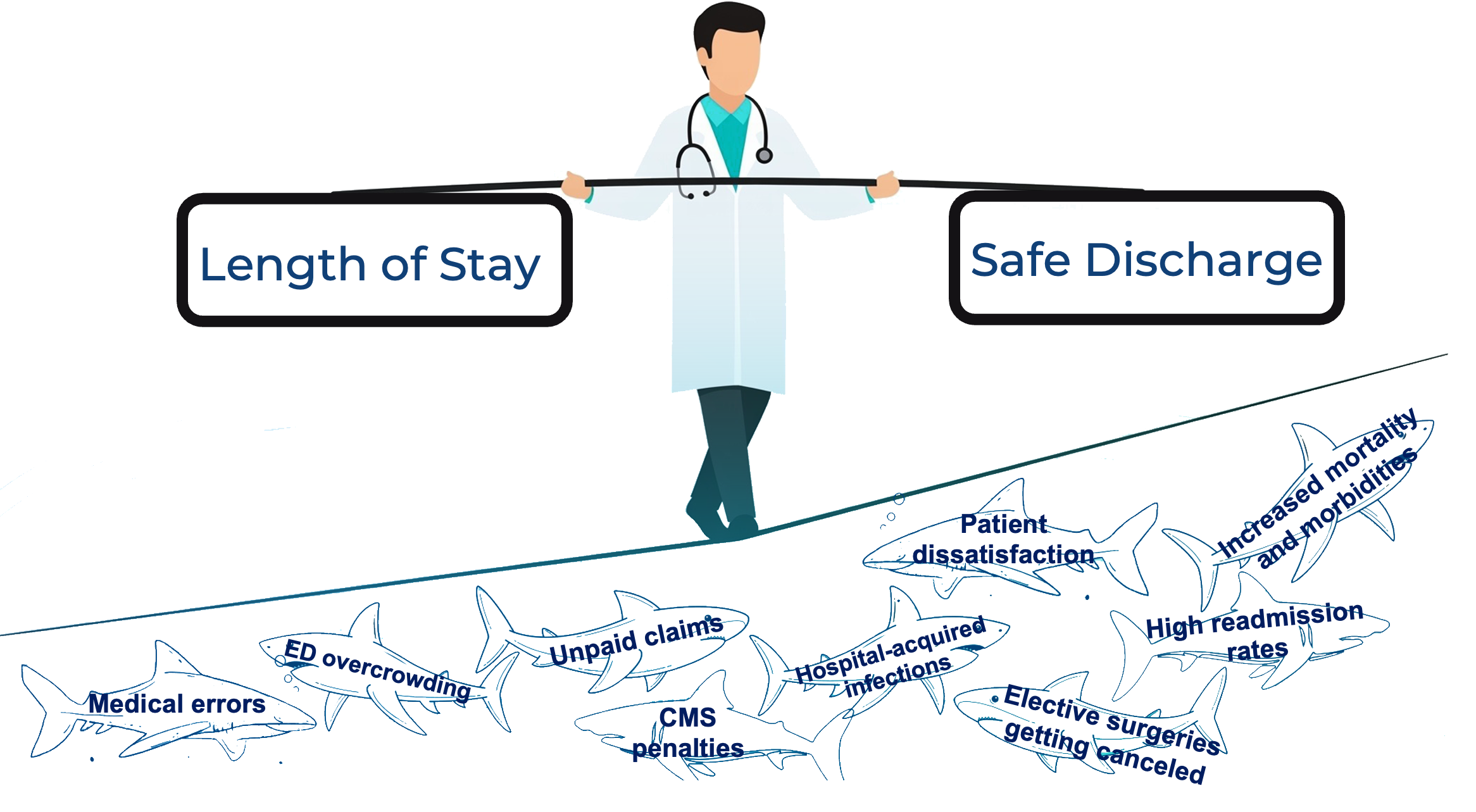
Physicians walk a daily tightrope. From admission onward, they balance the pressure to shorten length of stay against the need for a safe discharge. RyniX steadies each of those decisions with evidence, designed to reduce avoidable readmissions. The physician always decides.
Introducing RyniX: The Personalized Decision Aide
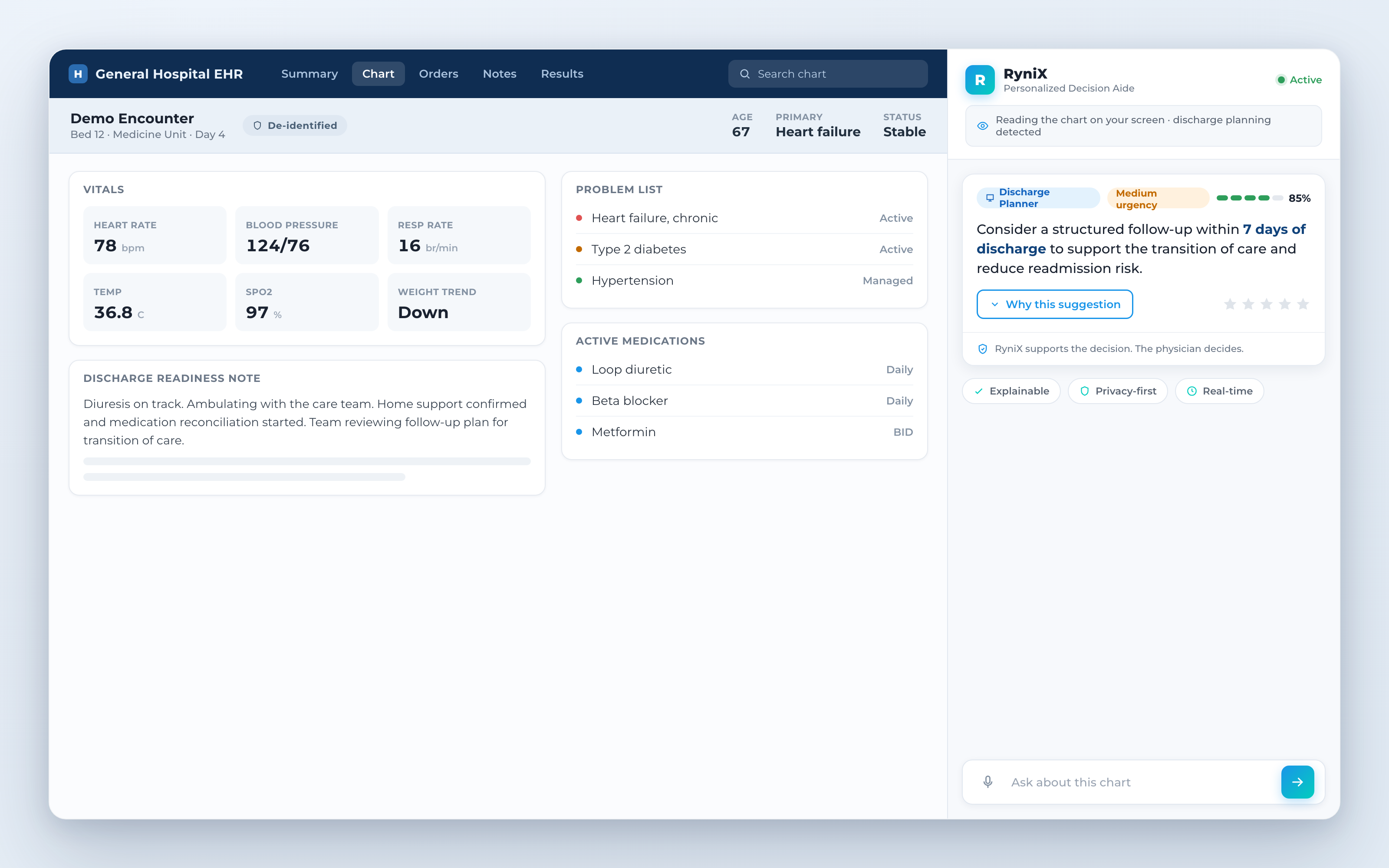
Unlike workflow tools that verify operations, RyniX addresses the decision-making bottleneck at the point of care with privacy-first intelligence.
Discharge Readiness
See what is holding up a discharge
Readmission Risk
Surface risk signals during the stay
Empower MDs
Restore clinical autonomy
Why RyniX
Privacy-First Architecture
Runs on your servers. Only anonymous context powers the analysis. Patient identities stay inside your hospital, and every deployment is covered by a Business Associate Agreement.
Explainable AI
Atomic Response Cards show exactly why RyniX recommends each action.
Physician Autonomy
Leaders see adoption by unit and role, so clinicians do their work without being ranked.
Transparent Economics
Every savings estimate shows its assumptions. Model your own hospital with the calculator below.
Model Your Potential Impact
Model the impact of shorter length of stay and fewer readmissions.
You set the two effect sizes, and your pilot measures the real ones against your own baseline. This is a model. It assumes 85% occupancy, with each freed bed day refilled by a margin-bearing admission (about $760 recovered per day), and values each avoided readmission at $15,200.